
Many for years have blamed various groups as being at fault for the Capitol attack on January 6. Whether it be all the fault of Trump’s supporters, or all the fault of foul actors, many in the media have not reported on how different institutions had a role in the matter. In the previous part of this series, the individuals who were on the ground that day were looked into further. In this part, we look at more of the institutional involvement of January 6 that was at play in answering the question this series seeks to answer: was any part of the January 6 Capitol attack an inside job?
According to details obtained by The Washington Post, the FBI had received extremely detailed tips concerning threats being made regarding January 6. In spite of this, the FBI decided to close their investigations on December 22, saying it “did not warrant further investigation at this time.”
Furthermore, per a Senate report from June of 2023, the FBI and Homeland Security ignored a “massive amount” of intelligence before the events of January 6. The report described that Homeland Security was downplaying the threat as the Capitol police were being attacked. The report also illustrates how the morning of January 6, despite individuals near the Capitol wearing “ballistic helmets, body armor, carrying radio equipment, and military-grade backpacks,” the FBI said there were no credible threats at the time. Later that day, after the Capitol attack had officially been declared a riot, the Capitol was locked down, the Capitol had been breached, politicians had been evacuated, shots had been fired, and entrances had been barricaded by congress members, Homeland Security was “struggling to assess the credibility of threats against the Capitol.”
FBI Executive Assistant Director of the National Security Branch, Jill Shanborn, refused to answer many of Senator Ted Cruz’s questions regarding FBI involvement during a hearing. “How many FBI agents or confidential informants actively participated in the events of January 6th?” Cruz asked. Shanborn responded, saying, “Sir, I’m sure you can appreciate that I can’t go into the specifics of sources and methods.” Cruz then repeats his question, before she simply says, “I can’t answer that.” Cruz then asked, “Did any FBI agents or FBI informants actively encourage and incite crimes of violence on January 6?” Shanborn again said that she could not answer that question, however. Cruz then pivoted to question Shanborn about Ray Epps. “Ms. Sanborn, is Ray Epps a fed?” Cruz asked. Shanborn replied with the same response: “Sir, I cannot answer that question.”
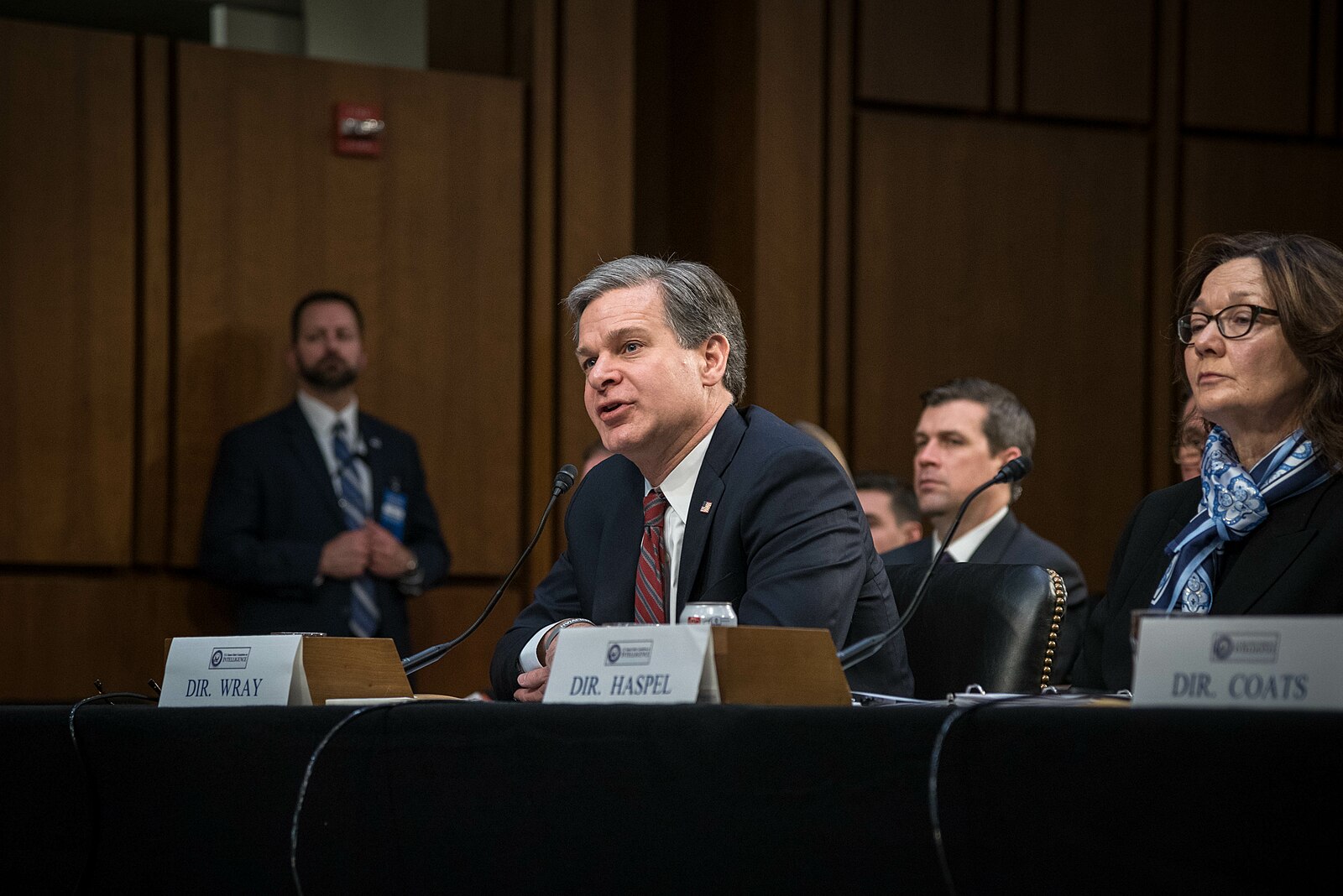
During a committee hearing FBI Director Christopher Wray also faced assertions by Representative Clay Higgins that FBI agents were involved in inciting violence that day. Wray called the allegations “categorically false,” however began by saying “I have to be very careful about what I’m saying here.” Wray was then asked if the FBI had any confidential individuals dressed as Trump supporters and infiltrated various groups that day, to which Wray responded, “Again, I have to be very careful with what I say.” Higgins interrupted, saying, “It should be a no. Can you not tell the American people, ‘No, we did not have confidential human sources dressed as Trump supporters positioned inside the Capitol’?”
Wray also faced scrutiny by Congressman Andy Biggs in another committee hearing when he was unable to give a response to his questions. When asked how many agents or human resources the FBI had there that day, Wray responded, “It’s going to get confusing because it depends on when we deployed and responded to the breach.” Biggs then fired back, saying, “You and I both know we’re talking different things here.” After asking a few more times directly, Biggs said, “I do not believe there were undercover agents.” When asked if the FBI had any assets there, however, Biggs did not answer the question.
Wray also faced heavy questioning from Congressman Darell Issa during the hearing when he asked the director if there was “at least one individual who worked for the FBI who went to the Capitol on that day.” Wray refused to answer if there was one or more there that day.
During a case against one person who stormed the Capitol, internal FBI communications revealed that despite an agent testifying she put all messages she was supposed to in an Excel sheet, there were over a thousand rows missing. Some of the messages that were deleted were done so by an agent who said her “boss assigned [her] 338 items of evidence I have to destroy.”

Additionally, an agent previously in charge of the FBI’s Washington office, Steven D’Antuono, has told the House Judiciary Committee under oath that he knew some of his informants were going to attend Trump’s rally on January 6. D’Antuono, though, said that the FBI was so lost as to exactly how many informants were there that the Washington Field Office asked the FBI headquarters to “do a poll or something” to find out how many were there.
During former Attorney General Merrick Garland’s testimony, he also stated that he didn’t know how many FBI informants were there on the day of January 6.
Representative Clay Higgins has since spoken on his view of the FBI’s involvement in the January 6th Capitol attack, saying, “They had, I suspect, over 200 agents embedded within the crowd including agents, or as they would call human assets, inside the Capitol dressed as Trump supporters before the doors were opened.” Higgins also claims that the FBI had infiltrated online chat groups in the months leading up to January 6 where they were promoting violence on the day, as well as that the FBI had ghost busses near the premises that day with agents dressed as Trump supporters within them.
A New York Times article also supported the claim that the FBI had eight informants embedded within the Proud Boys months leading up to the Capitol riot. Another also suggests that an informant had infiltrated the Oath Keepers as well.
Furthermore, January 6 Committee Chief Investigative Counsel Tim Heaphy has said, “Law enforcement had a very direct role in contributing to the security failures that led to the violence.” He also stated, “There was a lot of advance intelligence about law enforcement, about carrying weapons, about the vulnerability of the Capitol… The intel in advance was pretty specific, and it was enough, in our view, for law enforcement to have done a better job.” Heaphy also claimed that investigators found that the FBI and DHS didn’t do enough to sound the alarm, as well as that Capitol police did not deploy enough force to defend the building.
The Capitol police chief on the day of the Capitol attack, Steven Sund, has since tried to speak out on the situation, though has said he’s had difficulty doing so. Sund sat down for an interview, presumably in the early months of 2023, with Tucker Carlson while he was still working for Fox News. Carlson, however, was shortly after taken off the air, and the interview was kept from public view. Despite this, a leaker was able to obtain the footage of the interview. In part of it, Sund says, “They didn’t want me to testify in February 23 at the Senate hearing.” He went on to express his frustration, saying the following:
“To be honest with you, I’m a little pissed off because this didn’t have to happen. If people were reporting the intelligence correctly… if I was allowed to do my job as the Chief, we wouldn’t be here… Everything appears to be a cover up. Like I said, I’m not a conspiracy theorist, but when you look at the information the intelligence had, the military had, it’s all watered down. I’m denied intelligence, I’m denied the National Guard in advance, I’m denied the National Guard while we’re under attack for 71 minutes… It’s sad when you start putting everything together and thinking about it… It’s pretty concerning.”
Sund also said in another part of the interview that he was never told anything about the FBI having undercover agents there despite being in contact with Steven D’Antuono, head of the FBI’s Washington office, the day before. Sund went on to say, “According to the GAO (Government Accountability Office) report, [the FBI] had 18 operatives in the crowd. That’s a lot of operatives.” He later continued, saying, “And I think DHS is now saying they had a number of HSI – Homeland Security Investigations people in there as well.” This is on top of the amount of federal agents that went there that day reportedly on their own accord.
Since that interview with Sund never officially aired, Carlson did another one with Sund in August of 2023, which he then published to X. In it, Sund said the following:
“When you delve into the response on January 6 and the delay in obtaining resources – acting Secretary of Defense Miller and General Millie had both discussed locking down the city of Washington D.C. because they were so worried about violence at the Capitol on January 6. On Sunday and Monday they had been discussing locking down the city, revoking permits on Capitol Hill because of the concern for violence. You know who issues the permits on Capitol Hill for demonstrations? I do. You know who wasn’t told? Me. Instead, on January 4, what does Miller do? He puts out a memo restricting the National Guard from carrying various weapons – any weapons, any civil disobedience equipment that would be utilized for the very demonstrations or violence that he sees coming. Just doesn’t make any sense.”
Sund went on to say that this memo prevented the National Guard from Virginia or Maryland from helping on January 6 as well, despite Sund’s pleas for assistance and the Governors’ pleas to be able to help.
Chief Sund was able to testify to Congress on September 19, 2023. During his testimony, he said that former House Speaker Nancy Pelosi knew he had requested the National Guard three days prior to the Capitol attack. Sund said that the U.S. House Sergeant at Arms Paul Irving rejected his request, with Irving reportedly saying, “I don’t know. I don’t like the optics of that… Besides, the intelligence doesn’t support it.” Before Sund met with the Senate Sergeant at Arms Michael Stenger shortly after, Sund says he was told by Stenger that Irving called him and told him, “Sund came here looking for the National – asking for the National Guard. We got to come up with another plan. Pelosi will never go for it.” Sund said that during his conversation with Stenger, he told Sund, “You know, let’s come up with another idea.” He instead suggested Sund reach out to the Pentagon to see how quickly the Guard could respond.
Some have suggested that certain individuals were worried about deploying the military in concern that President Trump would attempt to misuse troops to perform an insurrection.
Many in the mainstream media made the claim that Trump was responsible for not deploying the National Guard that day. This, however, is a distortion of the truth.
It is unconstitutional for a president to use the military domestically. Legally, the President is able to authorize their use, however, it is up to others to then request them. According to the 1878 Posse Comitatus Act, the governor or Congress would have the authority to do so.
As there is no governor of D.C. to deploy the National Gaurd, the chain of command then instead flows down to the mayor of D.C., Muriel Bowser.

Retired U.S. Army Lt. General Keith Kellog has said that on January 3, he was present at the time of Trump’s request that National Guard troops be available for January 6. Documentation also shows that Miller indeed approved of the National Guard’s use, just as President Trump had requested, though it does not specify the amount.

A reporter who was following Secretary of Defense Christopher Miller around during the time also wrote about witnessing an exchange on January 5. The reporter, Adam Ciralsky, writes:
“They were meeting with President Trump on ‘an Iran issue,’ Miller told me. But then the conversation switched gears. The president, Miller recalled, asked how many troops the Pentagon planned to turn out the following day. “We’re like, ‘We’re going to provide any National Guard support that the District requests,’” Miller responded. “And [Trump] goes, ‘You’re going to need 10,000 people.’ No, I’m not talking bullshit. He said that. And we’re like, ‘Maybe. But you know, someone’s going to have to ask for it.’” At that point, Miller remembered the president telling him, “‘You do what you need to do. You do what you need to do.’ He said, ‘You’re going to need 10,000.’ That’s what he said. Swear to God.’”
President Biden’s Department of Defense has also corroborated that Trump’s administration did not “delay or obstruct” federal law enforcement in their response to January 6.
Despite this, numerous fact-checkers have continued to repeat that there is “no evidence” to support this notion. This also runs contradictory to General Mark Milley’s testimony before the January 6 panel. “Never once did I hear the president relative to the 6th specify the number of troops, 10,000 or any other number, for that matter,” Milley testified under oath.
Trump also insisted this to be true in an interview on Fox News just two months later. “I said that I think you should have… 10,000 national guardsmen.” He then continued, going on to say, “They took that number, from what I understand, they gave it to people at the Capitol.” He then claimed that Pelosi rejected this idea due to concerns that the optics of doing such would look bad. In that same interview, he condemned the riot that took place on January 6, saying “I think it’s terrible. I hate to see it.”
Despite the authorization, Mayor Bowser never deployed those National Guard troops to the Capitol. Instead, she deployed 350 unarmed guards to direct traffic as she had previously requested on December 31, 2020. On January 5, 2021, Bowser said that they would not be requesting further troops.


During the Capitol attack itself, since the mayor had still not authorized the use of the National Guard for the building, Sund again called the House Sergeant at Arms in hopes that it could be approved by Congress. Upon Sund’s request for the support, Irving replied, “Let me run it up the chain and I will get back to you,” according to Sund’s testimony. Considering last time Irving had said Pelosi would “never go for that,” Sund testified that his understanding was Irving was going to Pelosi for her approval. Sund says that 71 minutes went by before he got help and that he called 11 times before in that time span. He also testified that he called the Pentagon within that timeframe as well.
“I couldn’t wait any longer. I’d waited so long for the approval from the Capitol Police Board, both Mr. Irving and Mr. Stenger,” Mr. Sund said. “At 1:51 p.m., I called William Walker without even having authority and said: ‘Please … send me anything you’ve got. This is life or death.’” – Capitol Police Chief Steven Sund
Although much of the activity that occurred on the Capitol grounds was done so at an individual level, at the center of January 6 lies open-ended conclusions as to why certain institutional figures responded as they did. Between Chief Sund’s recounts, to the FBI’s mismanagement and refusal to answer questions, to certain figures’ refusal to deploy the National Guard quickly, it nonetheless leads the truth as to what really happened that day down a clearer road, despite the other questions that it raises.
While the information known regarding the institutional figures has been covered, one final question remains: What part did Trump or his allies play in the events of January 6? That timeline is what will be laid out in the next and final part of this four-part series.


Leave a Reply